Showing posts with label Caterpillar. Show all posts

Sunday, July 10, 2022

Raising Polyphemus Caterpillars part 5-cocoons

 September 26, Charlie and Alpha pulled together leaves and started their cocoons. A cocoon is the silk webbing that helps protect the inner pupa where the moth or butterfly go through their last change. some butterflies use silk to hang upside down before they make their final molt. Often, the pupa of this particular moth rattles inside the silk wrapped leaves when shaken and the sticks and leaves have been harvested as rattles. I just left them alone in a protected area. Since in a normal environment they are snowed on, frozen, and subjected to all kinds of weather, I put the two containers of cocoons inside an unheated building. 


September 28. Pee Wee, as mentioned before was quite a bit smaller. However, a day or two later, even this last caterpillar wrapped up for a long winter's nap. 


As easy as it was to raise the caterpillars, it wasn't as simple as it might be. First, we had no idea if the eggs laid were fertile. Then, the instars needed fed and their container cleaned. Thankfully, there are many blogs out there and after trial and error, I learned a few things. The tiny first stages are best gently picked up with the clean bristles of a paintbrush; you MUST keep a fine mesh fabric over the container because they climb and can escape; the branches and leaves need examined carefully to ensure you don't toss out the babies with the debris; and those leaves and branches need to be kept green. The latter is the most challenging. Sticking a branch in a glass isn't efficient because the caterpillars will drown. The best ways I found included getting floral picks from a craft store and putting stems inside tiny containers stuffed full of wet cotton balls with cling plastic and tape over the top. The floral picks worked well, but together the stems and branches had the best chances of staying green longer.  It was also easier when removing the debris if there was an upright branch the caterpillars could stay on while being outside the container.  No matter how large they are, they are still fairly fragile and accidentally dropping one would not be kind. The food was another frustrating thing, I've mentioned that in previous posts. Many of the large leaf maples were just too high off the ground for me to pick and I wish they'd have preferred a more easily obtained leaf! They also needed very lightly spritzed now and then with sterile water when they are in later instar stages. Because house caterpillars don't get rained on! For much of their lives, I used a plastic terrarium container for ease in cleaning. The caterpillars need warm temps to thrive, yet not too hot, because humidity in their containers can kill them. Another super important thing you should remember is household cleaning supplies. Chemicals can and will kill caterpillars and most any insect if they breathe it. Several persons who raise butterflies and moths stress the importance of not using these. You don't want to go through weeks of raising instars and lose them all to a bout of cleaning with bleach or carpet cleaners. Even if you are in a different room, air ducts move odors all over. 

 Later, after Charlie and Alpha built their winter homes, they were moved into a mesh enclosure. Pee Wee was left in the plastic container. If all three enclosed, that would make a LOT of wings in one spot and I wanted to give them some room.  Sometimes caterpillars can have tiny black dots on their bodies. Thankfully, none of these had any. Those dots are actually from an insect that has laid eggs inside the body of the caterpillar. When the cocoon is made, the eggs hatch and eat the caterpillar goo. So, you get a swarm of tiny good yard bugs instead of a stunning large moth!!!  Many places silk moths will brood twice a season. Here in the PNW, they only breed once. Polyphemus moths are usually found in our area around late June to late July. Since Jon had found the parent female on July 21, '21, we knew there would be a bit of a wait. Because the pupa inside the cocoons can dehydrate, once in a while, I did spritz the leaves around the cocoons, but for the most part, just kept an eye on them. Keeping an eye on them is super important. Caterpillars in inside cocoons, if kept too warm, can emerge much too early. Some people have had them emerge in February and all you can do is enjoy them inside until they die. 

Overall, the best part about human ecosystems is that as cocoons, they won't be eaten by squirrels, mice, or woodpeckers and as caterpillars, some just might end up surviving to reproduce. 

Saturday, July 09, 2022

Raising Polyphemus Caterpillars part 4 (the last week before cocoons)

These photos are the last ones of the caterpillars before they made their cocoons and hid inside to change. There is a children's book (which has been banned in some areas!) by Eric Carle called The Very Hungry Caterpillar. It is a silly grand picture book about a caterpillar and becoming a butterfly. The book caterpillar eats and eats a lot of inappropriate caterpillar foods. The things are also not great foods for a human to eat, but it is fiction and fiction is FUN! However, the idea behind the story is true. Caterpillars do eat and eat and eat and get very large and chubby, especially Polyphemus caterpillars. And they do turn into amazing gorgeous creatures with wings. 

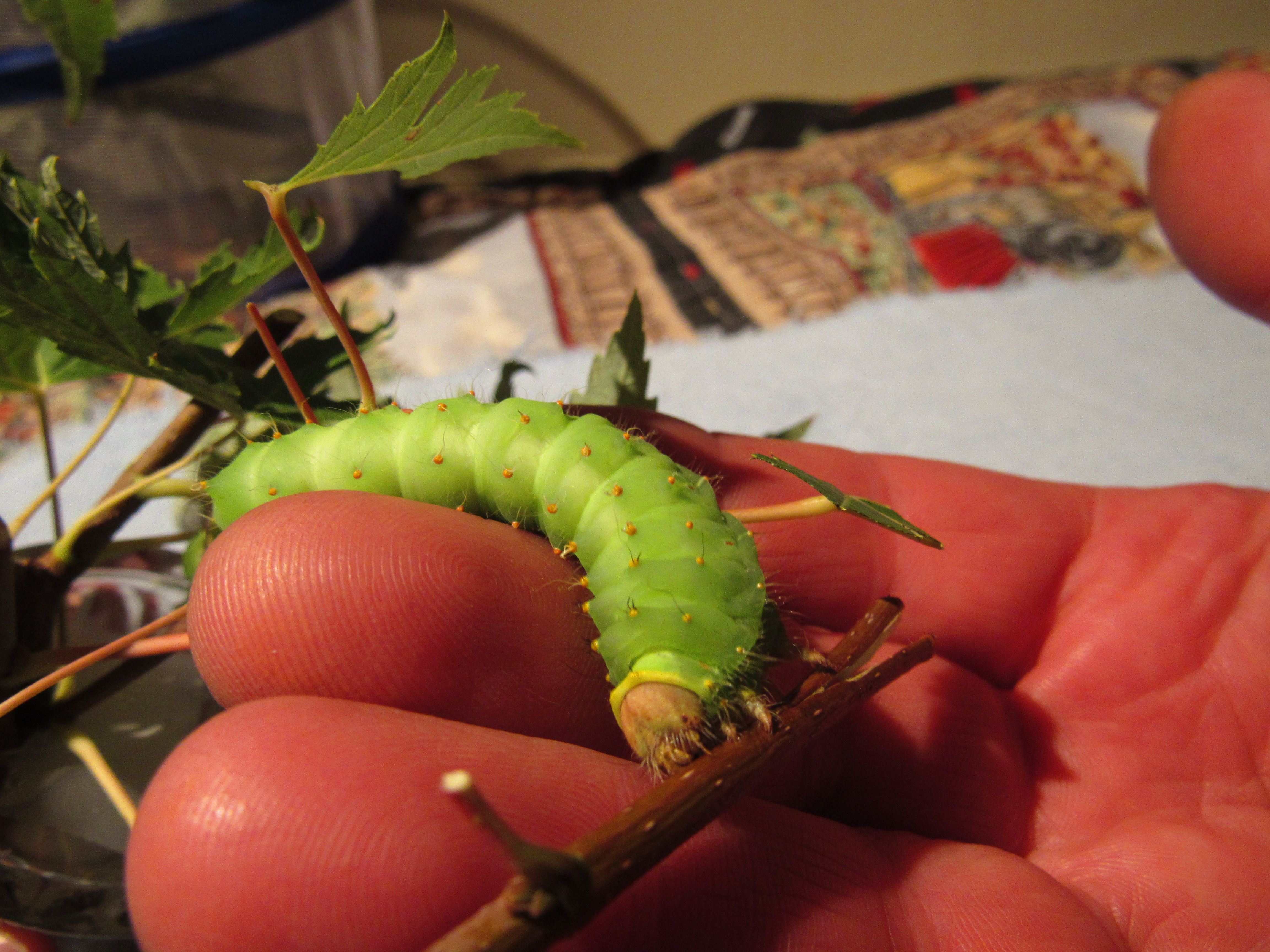
 September 18. Jon's hand against either Charlie or Alpha stretching. Remember, you can't tell sexes at this stage. 

September 19. Still munching on the large leaf maple leaves. I did try to see if they'd go for a different leaf after a time of molting, some breeders have said they might. These did not. 

September 21. All squished up. 

September 25. 


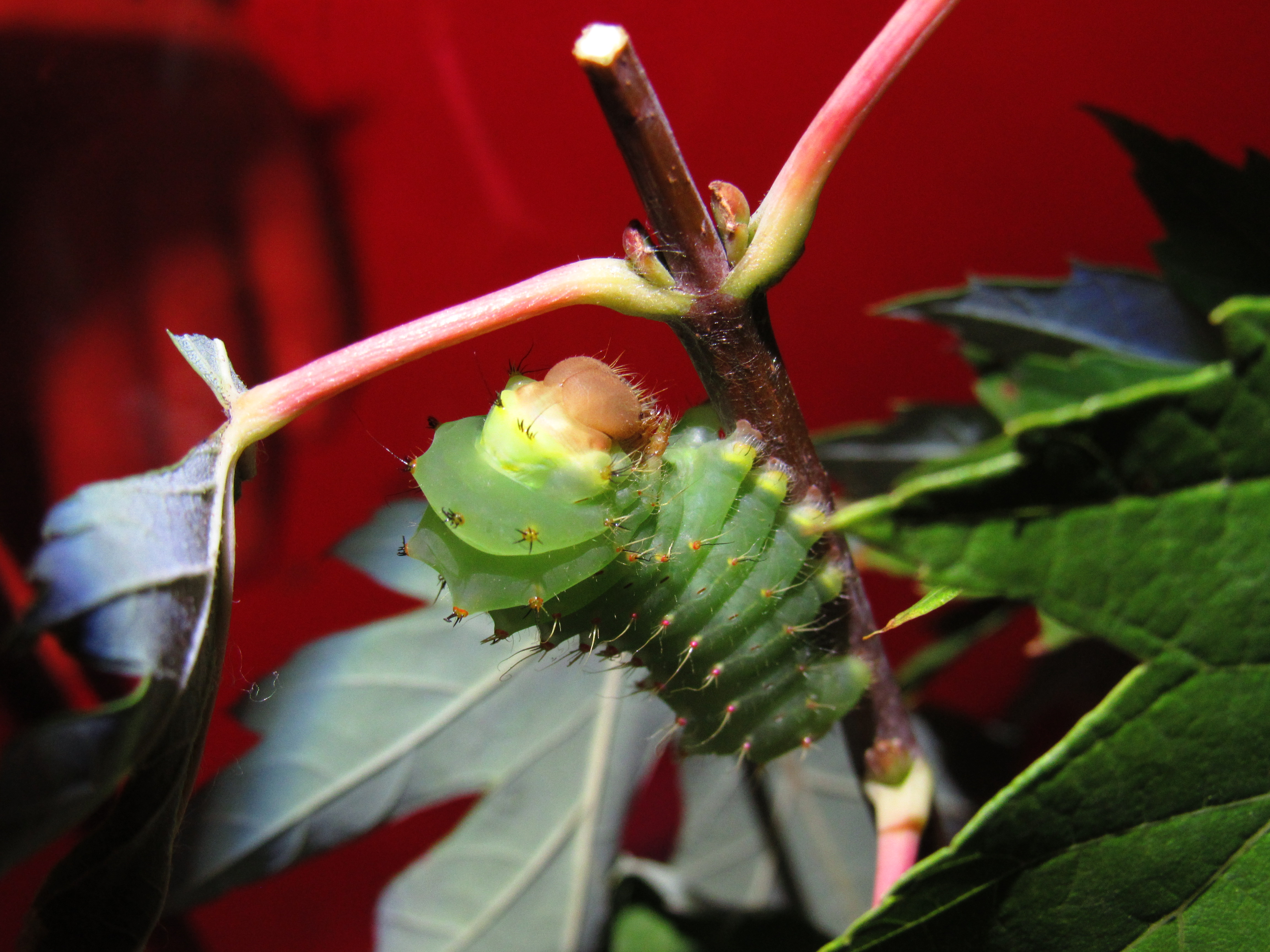
And more shots of those feet!! The pale bits under the yellow and black with bristles are the suction cups. 


Friday, July 08, 2022

Raising Polyphemus Caterpillars part 3- a larger instar

 As I mentioned, September was a huge time of change in these amazing creatures. Every single day they gained more centimeters. It was gratifying because I picked a lot of leaves for them and knowing they were eating and growing was nice. 

September 12. As mentioned in previous posts, measuring them was not the easiest task. Am not sure who this one is against the toothpick, although, you can see how fat they are getting! They did 99% of their eating hanging upside down. Something they do in the wild, or so I have read, is eat the entire leaf and then snip off where it was attached to the stem. This helps hide where they've been eating from predators. Once again, and not for the last time, the feet on the caterpillars fascinated me! 


September 13. Jon took these two. You can see how different this stage is from the former ones. 


September 14. They ate in a fast and methodological way. It reminded me of how an old fashioned typewriter worked. They'd start on one edge and clear out an entire row before moving down to the next 'line'. Jon's photos in the previous post also showed this. 


The next 3 are also Jon's photos. They are dated Sept 14, but I thought these were later. Steve is holding either Charlie or Alpha. 


September 15. 

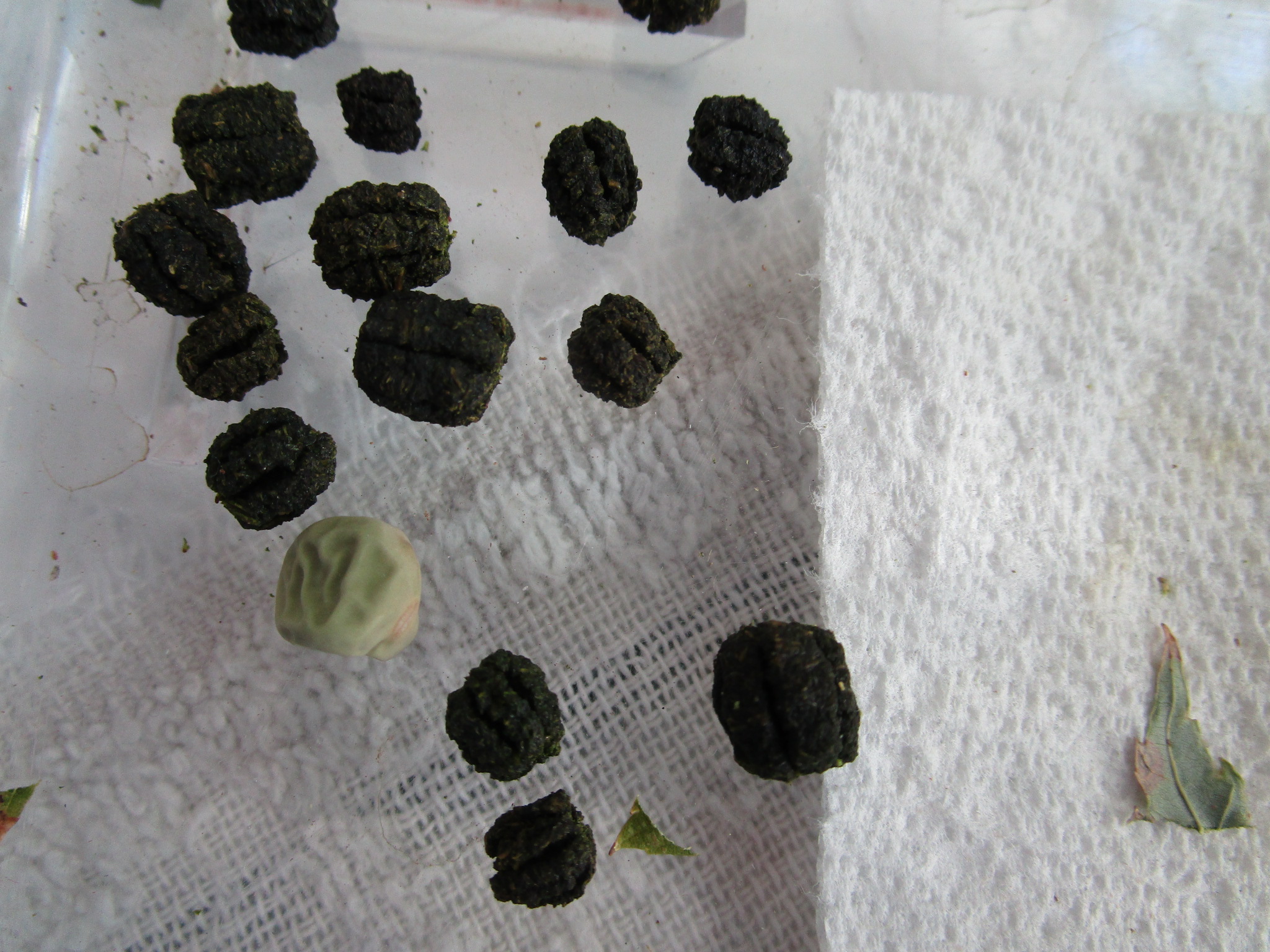
Caterpillar frass, or poop, is something you need to clean out as often as possible. As with any creature, a clean home makes for much better living conditions. By this stage in their life cycle, their frass was the size of a pea seed. They continued to shed as they grew. The bottom image has one of the face plates inside the end of a regular size paper clip. 


Thursday, July 07, 2022

Raising Polyphemus Caterpillars part 2-September growth

 August was a fairly interesting month for Charlie, Alpha, and Pee Wee. However, September was crazy! As they grew, I was completely captivated by their little sticky feet, their chompers, and the single minded devotion in devouring maple leaves! You could actually hear them munching as they ate. So, these next photos are parts of their growth you don't often find in many other blogs. 😀 

September 2


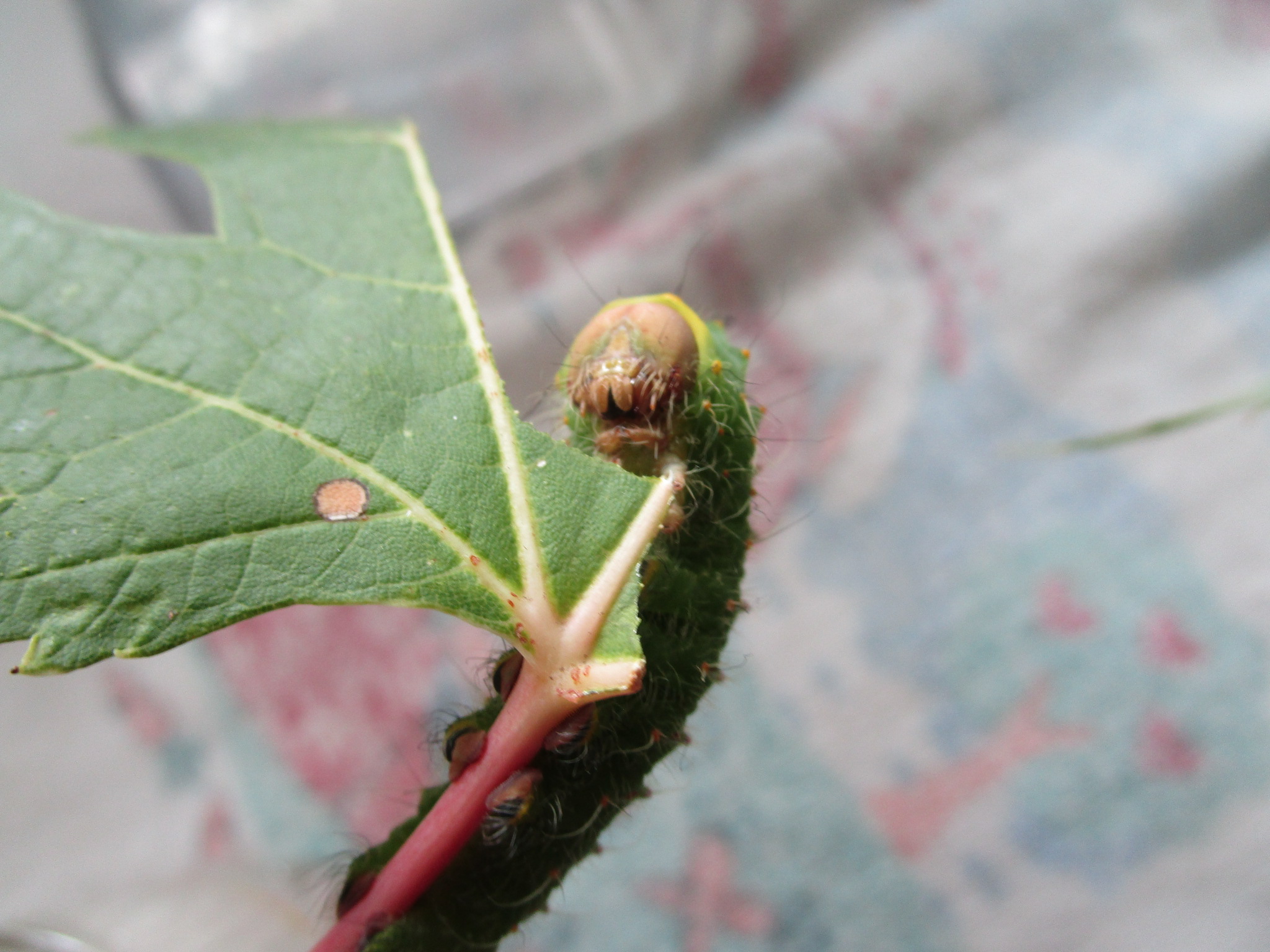
September 6 and 7. Aren't those 'teeth' incredible??? 


September 8. Such GREAT feet!!! As I mentioned, they are sticky and if you tug the critter, you can actually pull it apart because it doesn't like to let go of what it is holding. If you watch, you can see the little suction cups holding on and releasing as they inch their way along a branch or leaf. However, because those feet like to grab, it is difficult to get them to stretch out for a proper measurement. 


September 9. In the last image shows paired furry front feet. Those also are grabby, but not like the back ones. 


September 10 and 11.  As you can see, in the second image, Pee Wee is quite a bit smaller than the other two. I honestly can't remember which instar these guys are in. Before they shed, they are often very quiet and appear dead. I thought I had captured one shedding, but cannot find the picture. It was incredible watching it slowly break out and shrug off their old skin. Although, the first instars often do eat the eggshells, they older ones do not eat their sheds. (note: I think instar should not be pluralized, but no matter!!!) 


The last 3 are Jon's photos. He was able to capture how efficient these critters can chew!